Nobody warns you about the second week…
The first week after an unexpected ministry exit has a strange kind of adrenaline to it. There are conversations to manage, logistics to sort, and enough shock in your system to keep you moving. People check in. Your phone buzzes. You feel the weight of it, but you are still in motion.
Then the second week arrives. The calls slow down. The logistics settle. And the silence moves in.
That is when the real work begins. Not the public work of managing a transition, but the private, unglamorous, deeply necessary work of processing what just happened to your soul.
I have walked this road more than once across thirty years of ministry. And I want to tell you something before we go any further: what you are feeling right now is not a sign that your faith is weak. It is a sign that you are human. The anger is real. The grief is legitimate. And God is not frightened by either one.
There is a prophet in Scripture who knew this territory better than almost anyone. His name was Jeremiah. And if you are sitting in the wreckage of a ministry that turned on you, his story may be the most honest companion you have right now.
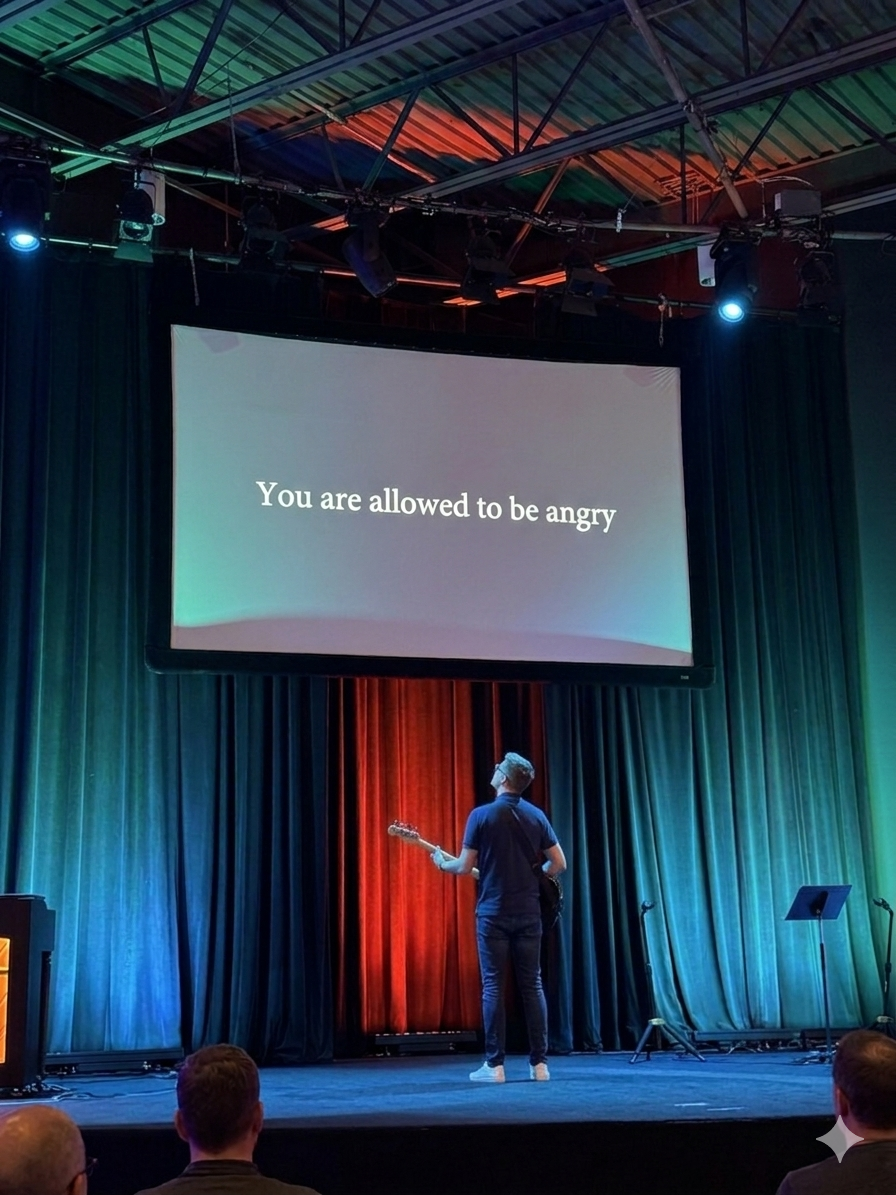
You Are Allowed to Be Angry
Let me say that plainly, because the church has not always done a good job of giving leaders permission to feel this.
Jeremiah was called by God before he was born, commissioned to preach to a nation, and promised divine protection for the journey. He did everything right. He delivered the word faithfully, at enormous personal cost, for decades. And the people he was sent to serve rejected him, mocked him, plotted against him, and eventually threw him into a cistern to die.
His response was not a tidy theological reflection. In Jeremiah 20, he turns directly to God and says what most of us have only thought: you deceived me. You promised protection and I got persecution. I wish I had never been born. That is not a man in spiritual failure. That is a man in spiritual honesty. And God did not strike him down for it. He met him in it.
The church has sometimes given pastors the message that the right response to betrayal is immediate, quiet, dignified forgiveness. And while forgiveness is absolutely where we are headed, skipping the honest reckoning does not make you more sanctified. It makes you more dangerous, to yourself and to everyone who comes after you.
What you do with the anger is what matters. And the first thing you do with it is bring it to God rather than managing it into something more presentable. The anger that goes to Him gets transformed. The anger that gets suppressed goes underground. And underground anger is far more dangerous than the kind you bring into the light. If you are angry right now, bring it to Him. All of it. He has seen worse from people He loved deeply. He can handle yours.
Grief Is Not the Same as Doubt
Jeremiah did not just preach to people who rejected his message. He poured his life into a people who ultimately turned on him personally. The book of Lamentations is his unfiltered mourning over Jerusalem, and it is some of the most raw, unguarded grief in all of Scripture. He was not detached from the outcome. He was devastated by it. That kind of grief is not weakness. It is the cost of loving people the way a pastor is supposed to love them.
Alongside the anger, most leaders I have walked with through forced departures experience a grief that surprises them in its depth. Not just sadness about the situation, but a more disorienting loss of identity. For many of us, ministry is not just what we do. It is who we are. When the role disappears suddenly, we are left with a question we may not have had to answer in years: who am I when I am not the pastor?
That is not a crisis of faith. It is a grief process, and it deserves to be treated as one.
Grief has weight and texture and its own timeline. It does not resolve on your schedule or anyone else’s. It circles back. It ambushes you in the grocery store, at your kid’s soccer game, in the middle of a worship song on a Sunday morning when you are sitting in a pew instead of standing behind a pulpit.
Give yourself permission to grieve what was lost without rushing to the lesson. There will be a time to mine the meaning. Right now it is enough to acknowledge the loss honestly before God and the few safe people He has placed in your life.
What I have found, both personally and in walking alongside others, is that ungrieved loss does not disappear. It calcifies. It becomes the bitterness that poisons the next season before it ever gets started. The pastors who struggle most in their next chapter are rarely the ones who grieved the loudest. They are the ones who never grieved at all.
Forgiveness Is a Direction, Not a Destination
Here is what makes Jeremiah’s story so remarkable. After the cistern, after the rejection, after the raw confessions of Jeremiah 20, he kept going. He kept prophesying. He kept interceding for the very people who had turned on him. Not because the pain had resolved, but because the call had not.
That is the shape of forgiveness in the life of a leader who has been wounded by the people he was sent to serve. It is not a feeling you wait to have. It is a direction you choose to walk in, one day at a time, often long before the emotions catch up. You do not have to feel forgiving to begin forgiving. You do not have to minimize what happened, pretend it did not hurt, or manufacture warmth toward people who wounded you. Forgiveness is not the same as reconciliation, and it does not require the other party to acknowledge what they did.
What it does require is a daily choice to release the verdict to God rather than carrying it yourself. The decision, repeated as many times as necessary, to stop rehearsing the offense and return your attention to the One who is actually writing your story.
For me, that looked like praying for the people involved, not because I felt like it, but because I knew I could not afford the cost of not doing it. Bitterness is too expensive. It extracts a toll from your joy, your marriage, your calling, and your next congregation long before you ever meet them.
Some mornings that prayer was three sentences long and felt completely hollow. I said it anyway. And over time, something shifted. Not all at once, and not without setbacks. But the direction I was walking eventually became the ground I was standing on.
That is how forgiveness works. You choose the direction. God handles the distance.
You Planted. You Watered. Trust the Harvest.
At the bottom of all of this, underneath the anger and the grief and the long work of forgiveness, there is a question that every displaced pastor eventually has to face: did any of it matter?
Paul gives us an answer that is both humbling and deeply freeing. In 1 Corinthians 3:6 he writes simply: I planted, Apollos watered, but God gave the growth.
You were never the one responsible for the harvest. You were responsible for the planting, for the watering, for the faithful showing up season after season to do the work God assigned to your hands. The growth was always His to give. The outcomes were always His to steward.
Jeremiah preached for decades to a people who largely did not listen, did not change, and did not honor him for his faithfulness. By almost every measurable ministry metric, his tenure would look like a failure. And yet his words endured. They shaped the faith of generations. They are still shaping yours right now.
Your labor was not wasted. The seeds you planted in people, in families, in moments of quiet faithfulness that no one recorded, those do not disappear when your title does. They are in God’s hands, growing on His timeline, bearing fruit you may never see from where you are standing.
You planted. You watered. You can trust Him with the rest.
A Safe Harbor in the Trenches
The internal work of processing anger, grief, and forgiveness after a forced departure is some of the most important work you will ever do. It is also some of the loneliest, because most of the people around you have moved on while you are still standing in the middle of it.
You don’t have to navigate this trail alone. Through the generosity of our kingdom donors, C4 Coaching is completely funded for pastors and ministry leaders in need of support. The only thing you need to bring is yourself.
If you need a confidential, safe brother in the trenches to help you process your transition with dignity and protect your soul, I would be honored to sit with you. No strings attached. Completely private.
[Click Here to Schedule Your Confidential 15-Minute Transition Call]










Leave a Reply